Monday, February 28, 2011

Al Qaeda and The Fall of Terrorism Through Non-violent Democracy Movements

Al Qaeda Finds Itself at a Crossroads
This new reality in the middle east deserves in-depth academic and journalistic analysis, but, at first glance, it appears the fall of terrorism is at hand. This reality which we have fought so hard and spent so much money to achieve is likely to happen at the hand of indigenous democracy movements.
Democracy gives people a means other than violence to air grievances and promote their own self-interest. Of course, disappointment is bound to follow and some democratically elected leaders could become strong men and refuse to leave power. The end game and stability is a long way off.
What excites me as well is how this just might prove, once and for all, that radical Islam was just a flash in the pan. Time to find another bogeyman.

Sunday, February 27, 2011

Libyan Professionals and Intellectuals Ruling 80% of Libya and Controlling 80% of Libyan Oil Fields

The future is looking more democratic and stable in Libya as the NY Times reports:


They said the city was now under the control of a committee of prominent citizens — doctors, lawyers, judges, engineers and the like — who were organizing its public services and continued defense. “We are really suffering for 42 years, and people are asking here for the same things as other people of the world — they want the real democracy,” said Ahmed el-Hadi Remeh, an engineer standing in the square.

Uganda Police Outlaw Planned Election Protests

Uganda Police Outlaw Planned Election Protests

If you know much about Uganda and I am just learning, the president of Uganda, Yoweri Museveni, has been in power for 25 years. The opposition has called for protests of the recent elections, Feb 18, 2011.
This call for real substantive democracy is getting serious everywhere. We are experiencing a tectonic shift in people's expectations of representation. This is the late 1700's all over again.
Consider how this speaks to the psychological power of truth. The truth is that a group of demonstrators has overthrown Western supported and thoroughly entrenched dictators in Tunisia and Egypt. This single fact has captured the minds of millions of oppressed people.
Change is great and change is needed. But, too much change is painful. Pray for all these people and for the work of NGOs and experts in democracy promotion.

Dallas Willard on Scripture Memorization

I wrote about our family's two primary disciplines, reading the bible one page a day and scripture memorization at a pace of 2 verses a day. We have revised this to 10 verses a week, but anyway. Often people think scripture memorization is too "elementary" or too rote. Isn't bible discussion and bible story telling more effective and, well, cool?
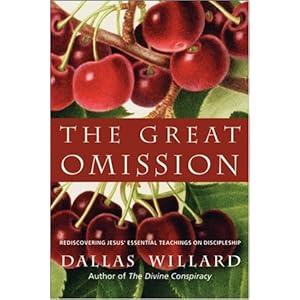
Dallas Willard is a pretty smart and critical thinking kinda guy, and this is what Wilalrd says about scripture memorization in The Great Omission, p 58:
Bible Memorization is absolutely fundamental to spiritual formation. If I had to - and of course I don't have to - choose between all the spiritual disciplines of the spiritual life and take only one, I would choose Bible memorization. I would not be a pastor of a church that did not have a program of Bible memorization in it, because Bible memorization is a fundamental way of filling our minds with what we need, "To have the book of the Law ever before us" (Joshua 1:8)
Simple as it sounds, a few verses a day and rehearsing these verse to and from wherever we are going is fundamental to spiritual transformation.
peace,

Friday, February 25, 2011

Wisconsin Gov. Scott Walker's Recipe for Corruption

From Paul Krugman, Shock Doctrine, U.S.A.,
For example, the bill includes language that would allow officials appointed by the governor to make sweeping cuts in health coverage for low-income families without having to go through the normal legislative process.
And then there’s this: “Notwithstanding ss. 13.48 (14) (am) and 16.705 (1), the department may sell any state-owned heating, cooling, and power plant or may contract with a private entity for the operation of any such plant, with or without solicitation of bids, for any amount that the department determines to be in the best interest of the state. Notwithstanding ss. 196.49 and 196.80, no approval or certification of the public service commission is necessary for a public utility to purchase, or contract for the operation of, such a plant, and any such purchase is considered to be in the public interest and to comply with the criteria for certification of a project under s. 196.49 (3) (b).”
What’s that about? The state of Wisconsin owns a number of plants supplying heating, cooling, and electricity to state-run facilities (like the University of Wisconsin). The language in the budget bill would, in effect, let the governor privatize any or all of these facilities at whim. Not only that, he could sell them, without taking bids, to anyone he chooses. And note that any such sale would, by definition, be “considered to be in the public interest.”
That doesn't sound right considering the Governor's primary campaign contributor is the largest privately owned energy company in America....

Wednesday, February 23, 2011

A Tweet from the Street

If Not Now, When? - The Changing Arab World

If Not Now, When?

The link above is to Thomas Friedman's February 22, NY Times article. It is a good read and puts the Arab revolutions in perspective. These are some poor and oppressed people. Much of their oppression was funded and supported by our addiction to oil. This is a moral issue.

The reason buying pornography is wrong is not just because it is a bad habit but pornography oppresses women and is support for human trafficking. That is the tragedy of pornography. So too with oil. The dependence on oil and our dysfunctional relationship with Arab dictators is immoral. As a nation, we need to make tough decisions. This is a perfect example where we have to use our government to help us make decisions that we cannot make as consumers.

This is a Christian issue. As Christians, we are citizens and voices for the oppressed of the world, especially oppressed people who are different than us. But this is not something that we can do as consumers. We cannot voluntarily boycott our way to lower oil consumption. Instead, we make a sober minded decision to levy good policy at the national level.

What the exact policy is, I am not sure. I imagine it has to do with taxes. We levy a sin tax on gasoline. We use the tax to fund a new green economy. The time is now to make the change. If we do not we will get rocked by high gas prices anyway. Really, we are a few decades late to the party. But better late than later.

Sunday, February 20, 2011

Libya - Massacre and the Role of Intellectuals and Religious Scholars

Libya revolt spreads to Tripoli
'This is an urgent appeal from religious scholars, intellectuals, and clan elders from Tripoli, Bani Walid, Zintan, Jadu, Msalata, Misrata, Zawiah, and other towns and villages of the western area,' the appeal, signed by the group of leaders, stated.

'We appeal to every Muslim, within the regime or assisting it in any way, to recognise that the killing of innocent human beings is forbidden by our Creator and by His beloved prophet of compassion, peace be upon him... Do not kill your brothers and sisters. Stop the massacre now!"
brad

Saturday, February 19, 2011

Banksy LA with the Kids

We went to Westwood today to see the Banksy. It was way better than I expected. Quite incredible actually. I remember sitting in St Peter's basilica at the Vatican when I was 16. This was actually like that. Family memories: James and Lily!!! with Dean Gadberry. Peace,


Sunday, February 13, 2011

Spiritual Disciplines 2 - Family Bible Reading

Aaron and Hur Help Moses
During the Battle with Amalek
I mentioned scripture memory in this brief post, An Example of Spiritual Discipline - Scripture Memory - Two Verses a Day. Today, I want to suggest a very simple way to teach your children the basics of the bible.
Looking at most bibles, the history sections of the Old Testament, from Genesis to Ester, are usually about 350-400 pages long. For example in the NASB bible that our family reads, this portion of scripture is 369 pages. So as a family, our goal is to read one page a day for a year.

Using this one page a day method, we will read all the old testament stories in one year. I have six children and the little one's are not ready to understand the poetry of the prophets. So I do not consider the prophets as part of there basic bible education. To cover the prophets, we will pick a few key verses (i.e. promises and challenges) and memorize these together as a family. The same would be true for the psalms and proverbs.

So by coupling these two simple disciplines of one page a day bible reading through the historical books of the Old Testament and scripture memory, it is easy to give your children a solid biblical education.

Thursday, February 03, 2011

An Example of Spiritual Discipline - Scripture Memory - Two Verses a Day

Here is a very simple challenge. A lifelong discipline of scripture memory is an easy and effective way to a thorough knowledge of the New Testament. If a believer memorizes two verses a day, he or she can memorize the entire New Testament every ten years. If instead of memorizing every verse and only memorize key passages, in three or four years, a total mastery of the New Testament can be obtained.

Another benefit is that scripture memory gives a way to bracket the day with one thought with morning and evening meditation. Another benefit is that a single topic can be contemplated for about a week or so as most paragraphs are 8-12 verses long. Over the course of say 3-4 months, your meditation has been centered on one book of the bible, and, though this is a slower method to proceed through the New Testament, it is far more effective in learning the thoughts of the author.

Also, this is something, we can do with a friend or a spouse. This practice is my commitment this year, and, hopefully, by God's grace and the encouragement of friends, a commitment I could keep for the rest of the decade or even the rest of my life.

Great Read on the Muslim Brotherhood

Egypt’s Bumbling Brotherhood

Main points: 1. The Muslim Brotherhood will not take power in the long run - the people will. 2. The Military will be in real power for the next couple of years until democratic institutions are more established and real democracy unfold.

Tuesday, February 01, 2011

President Obama on Transition in Egypt

President Obama on Transition in Egypt

Statement of Egypt Working Group, Jan 29, 2011

Statement of Egypt Working Group, Jan 29, 2011

The Quest for Dignity - Tuesday Brooks

The Quest for Dignity

Brooks is agreeing with a statement I ended up deleting from a post last night out of fear that it was the wine talking.

The USA is continually behind events and ends up supporting authoritarian regimes in the face of people seeking freedom. It is the same old power seeking to sustain the status quo.

Monday, January 31, 2011

Egypt Protests - The Army Will Not Fire on the People

The Protestors' Fight in Egypt - ABC News

So the Army will not fire on the people and tomorrow is the big day. I almost want to stay home and watch the news. The winds of change in the Middle East. The power of the media is at work for democracy.

US Egyptian Relationship after the Revolt and Democratization

What the U.S. Loses if Mubarak Goes
One thing I notice reading this article is that the popular US perception of Arab politics as "moderates" vs. "radicals" is not likely to be reality.
Certainly, the internet and wireless has to play a huge role in the overthrow of closed and repressive regimes. When the printing press arrived so did the protestant reformation and ultimately democracy. Now, with the internet, another move toward power for the people is emerging. The question is will this people go the way of Gaza and place a Hamas styled anti-American party in power.
From Mansoura Ez-Eldin of the NY Times
Clearly, the scent of Tunisia’s “jasmine revolution” has quickly reached Egypt. Following the successful expulsion in Tunis of the dictator Zine el-Abidine Ben Ali, the call arose on Facebook for an Egyptian revolution, to begin on Jan. 25. Yet the public here mocked those young people who had taken to Twitter and Facebook to post calls for protest.

Saturday, January 29, 2011

Where is Egypt Going? - After Mubarak, will Egypt face a void?

After Mubarak, will Egypt face a void?
Top contenders:
Mohamed AlBaradei
Amer Moussa

Will Egypt Become a More Open Society - An eyewitness account of the Egypt protests

An eyewitness account of the Egypt protests
It is hard to know what to think about the protests and possible revolution in Egypt. The protests seem motivated by the people's desire for democratization and against police and military oppression. It always comes down to the politics that follow.


This eyewitness account by Ahdaf Soueif (more) tells a picture of people taking back their country. Our hopes and prayers are with the Egyptian people that freedom and civil rights for minority peoples and minority opinions will win the day.
and of course AlJazeera Live blog

Friday, January 21, 2011

China Goes to Nixon - More on China Currency Denial

China Goes to Nixon

A few weeks back, i started to write on the need for China to let it's currency float with the market and rise in value. The Chinese currency is estimated to be 50% under value which greatly effects trade with other nations making Chinese exports artificially cheap and leads to inflation in China. All this is a mess the chinese are dealing with by tightening credit instead of solving the currency problem. This obviously is related to special interests in China probably US multi-nationals included.
History teaches us that this is all a very bad thing:
Krugman:
Could all of this really turn into a full-fledged crisis? If I didn’t know my economic history, I’d find the idea implausible. After all, the solution to China’s monetary muddle is both simple and obvious: just let the currency rise, already.
But I do know my economic history, which means that I know how often governments refuse, sometimes for many years, to do the obviously right thing — and especially when currency values are concerned. Usually they try to keep their currencies artificially strong rather than artificially weak; but it can be a big mess either way.

Plans being drawn up to let states go bust

Plans being drawn up to let states go bust

The night of the 2010 election, I said to my wife, "This is very bad news for the states. There is simply no way California for example can make it without a bailout."
Not a good time to be a retired state worker in California.

Sunday, January 16, 2011

Israel and the Stuxnet Virus

This story of Israel's use of a commuter virus to partially destroy Iran's centrifuges which enrich nuclear materials is a wonderful story of multi-national cooperation. As reported here, Virus attacking Iran Nuke Plants is Israel, and here, 'Israel tested Stuxnet virus on Dimona plant', the Americans, the Germans, the Brits and the Israelis worked together to pull this off.

No bad press images. No civilian casualties. But the semi-successful efforts is reported to have put time back on the clock. Net result: a pretty big win for the good guys!

Saturday, January 15, 2011

Banksy on Revolutionary Art

I must admit, I am way into the democratization of media. Back in 2003 or so when this blog started that was the source of blogger enthusiasm. Too bad most bloggers are so nuts that it gave the whole sphere a bad rap. In the same way, street art and new media gives the power of art generation and distribution back to the people.

In the late '70's, this "everyone gets to play" motif was the idea behind punk rock. The whole point was that rock and roll needed to be given back to the everyday guy on the street. Having to kiss up to power is certainly antithetical to rock and roll.

So, how does Banksy fit into this?...Well, below, Banksy explains how Mr. Brainwash revealed that sometimes Banksy is the man too...very self-aware reflection.
Wired.com: Your work explores power, tests power and is therefore revolutionary, encouraging people to subvert the powers that be. Mr. Brainwash kind of did this to you. He looked at the power structure around him (you and Fairey) and exploited it for his own ends. Does that make him a student — or a con man?

Banksy: Thierry essentially trespassed into the art business, and even in the wild world of vandalism there’s a lot of conservatism — people don’t like to see the rules being broken. The story of Mr. Brainwash should be inspirational, and in the hands of a more cheerful director it probably would’ve been. The film might come across as a bit cynical, but it’s important not to forget these are revolutionary times in art.

There’s a whole new audience out there, and it’s never been easier to sell it, particularly at the lower levels. You don’t have to go to college, drag ’round a portfolio, mail off transparencies to snooty galleries or sleep with someone powerful. All you need now is a few ideas and a broadband connection. This is the first time the essentially bourgeois world of art has belonged to the people. We need to make it count.

Sunday, January 02, 2011

Love is in the Air - Banksy


Banksy 2010

I took a few pics from this post ...The Banksy 2010 Top 10
Here are more Banksy's from 2010. Every one of these is incredible.


Banksy Art

Banksy's graffiti on the wall dividing the Palestinian and Israeli sides of the west bank.

My family and I watched a Banksy video yesterday. The commentary of his graffiti is inspiring. For more go here 

Friday, December 31, 2010

It's Yuan Appreciation Day

Gradual Yuan Appreciation Has Net Benefit To China - WSJ.com
See this post for my comment: Yuan Appreciation Great News

The Appreciation of the Yuan - Great News

Yuan ends 2010 with a flourish, up 3.6 percent on year
Happy New Year!! I find this very comforting. As the Yuan appreciates against the dollar, US exports become more competitive in the Chinese market. Also, Chinese imports become less competitive in the US. This is good news for the US worker, like me, and for Hedge funds who are smart enough to go short on the dollar.

Man, if I only had, 100 million dollars of collateral, I would go short on the dollar for about a billion. It feels good when the big money and the American worker are in the same boat. I am bullish on 2011 (with the one exception of the housing market).
Happy New year, brad

Thursday, September 30, 2010

Romans 1:1-5 From Paul's Perspective

The Gospel and Redemptive History
Romans 1:1-51Paul, a bond-servant of Christ Jesus, called as an apostle, set apart for the gospel of God,2which He promised beforehand through His prophets in the holy Scriptures, 3concerning His Son, who was born of a descendant of David according to the flesh,4who was declared the Son of God with power by the resurrection from the dead, according to the Spirit of holiness, Jesus Christ our Lord,5through whom we have received grace and apostleship to bring about the obedience of faith among all the Gentiles for His name's sake,
Sometimes the biggest obstacles to learning are the things we think we already know. If we think we understand someone else’s perspective, these preconceptions will cloud our ability to actually hear what is being said. When reading the bible or studying a book like the book of Romans, it is familiarity with the gospel and protestant teachings that can become the biggest obstacle to hearing what Paul is actually saying. 
We often interpret the book of Romans in light of the monumental debates of the protestant reformation. How is a person justified before God? What is the relationship between faith and works? How can a person be assured of their eternal salvation? These are important questions and these questions are clearly answered in the book of Romans, but are these really the primary concerns of Paul? Is Paul answering people’s questions about how to get to heaven or how to be right before God? Or instead, is Paul’s argument about justification through faith for both Jews and gentiles part of a deeper, more profound question? 
If we look at the opening verses and we think from the mindset of a Jewish apostle living in the 1st Century, if we look actually at the context in which Paul was living and preaching the Gospel, we hear these words with a fresh perspective. 
Paul, as a Jew, longed for God to vindicate His name, defeat evil, and bring liberation to His people. The question looming in the minds of 1st century Jews was how is God going to defeat pagan unrighteousness and bring glory to His name. In this light, Paul, then, is asking and answering the question, “How is God conquering evil and glorifying His name through the gospel of the cross?” Paul’s heart beats with the Jewish hope for the victory of God. But how could a defeated crucified Messiah be bringing about this conquering of evil? The weakness of the cross is a stumbling block to the Jews. How could the “defeated” Jesus be the promised Messiah? In light of this paradox of a crucified Messiah, Paul begins this majestic presentation of the gospel.  
Paul opens with these almost ecstatic words concerning the powerful Christ. 
Romans 1:1-51Paul, a bond-servant of Christ Jesus, called as an apostle, set apart for the gospel of God,2which He promised beforehand through His prophets in the holy Scriptures, 3concerning His Son, who was born of a descendant of David according to the flesh,4who was declared the Son of God with power by the resurrection from the dead, according to the Spirit of holiness, Jesus Christ our Lord,5through whom we have received grace and apostleship to bring about the obedience of faith among all the Gentiles for His name's sake, 
Paul lists the key characteristics of the Gospel, this Good Proclamation, that He is commissioned to preach.
  1. The Gospel was promised before hand by the prophets in the holy scriptures. 
  2. The Gospel is concerning God’s son who is of the Messianic lineage of David
  3. The Gospel proclaims Jesus the Son of God with power through the resurrection from the dead. 
  4. The gospel has a purpose to bring about the obedience of faith among ALL the gentiles. 
The gospel is the fulfillment of the promise of the Messiah, Jesus, who is the Davidic king who is filled with the power of the Son of God and who is bringing about obedience amongst all the Gentiles. This gospel, which Paul preaches, fulfills the Jewish hope which centers on one thing and one thing only – the victory of God. The purpose of the Gospel is ultimately not to provide a way for individuals to be at peace with God. Surely, the gospel does this, but, to Paul, the Gospel must be understood as the answer to the problem of the oppression of God’s people and the ever-present evil of paganism on the earth. 
Before his conversion, Paul was violently opposed to the Christian idea of a crucified defeated Messiah. To the pre-christian Paul, the Christian message was anathema to the Old Testament promise of God’s victory over evil through the Messiah. If the Messiah is defeated, if the Messiah is powerless to defeat evil, then God does not get the victory in human history. So, the question which a Jew confronted with the Gospel of the cross must answer is “How is this message concerning this crucified Christ going to defeat evil and bring glory to God and therefore fulfill the prophetic promise of the victory of God and God’s people?”    
Well , the answer or at least the outline of  Paul’s answer is right here in these opening thematic verses. The gospel of the cross is the gospel of power and victory amongst both the Jews and gentiles in fulfillment of the words of the prophets. 
When a Jewish believer thought of David, it was David the conqueror. Paul is proclaiming Jesus the greater David, the greater conqueror. 
When a 1st century believer heard the term Son of God, he or she thought of Caesar. Paul is saying that one more powerful than Caesar has come and is alive. He is the Savior and the one we are to place our hope for victory.
When Paul speaks of the resurrection He is speaking to a people persecuted and fearful of death. Well, there is one stronger and mightier than even death, Jesus Christ our Lord. 
The Christ has come to destroy evil and exalt the name of God through faith in Him and obedience to His teachings. The gospel is winning and turning men and women around the world from rebellion to the obedience of faith. Through the Gospel, Christ is proclaimed as king and His teachings as the way of God’s kingdom. Through the cross both Gentiles and Jews are invited and converted, and the people of God are united, forgiven, free and powerful. 

Sunday, September 19, 2010

Orszag on Health Care and Higher Education

A Health Care Plan for Colleges - NYTimes.com
Health Care is still a vital issue effecting America's ability to compete in the 21st Century global environment. In this moment when America's ability to compete is threatened so many roads point to our broken health care system. Orszag's editorial this morning, explains how America's wealth is being funneled into health care and out of the educational and technological infrastructure that will enable America to complete with the other developed countries for middle class jobs.
In this article, Peter Orszag shows the correlation between rising health care costs and the states ability to fund eduction. American health care costs account for 17% of GDP while the next closest competitor nation pays a cost of only 10% of GDP. America pays 70% higher costs for health care. Because health care costs have risen to such a level, during a downturn, these costs put excessive pressure on state budgets. In such downturn generated budget crisis, higher education is the first thing to go. States cut education to pay for the Medicare costs which have risen along with the spiraling health care costs in general. The tragedy is that, when the economy recovers, funding for higher education is not restored to its previous levels. The result is that as health care costs have funneled tax dollars from education to insurance companies America has fallen from 1st to 12th in the percentage of young adults entering the workforce with a college education.
Anyone who runs a business knows that if our costs are 70% higher than our competitors, we are going to lose the competition. In this case, the competition is for capital investment in our economy. Companies invest in the quality of the national workforce and as our educational levels fall skilled jobs will move elsewhere. While other countries invest their tax dollars in education, in America, we pour our precious tax dollars down a sink hole of rising health care costs. This explains why the decision to fix health care in order to solve the structural economic problems was the right decision to salvage he long term prospects of the American dream even if the result is a political nightmare.

Clinton explains rising health care costs on meet the press this morning.

peace, brad

Saturday, September 11, 2010

Matthew 6:19-34 and the Decision to Not Accumulate Wealth

One of the most profound errors in protestantism is the misinterpretation of Matthew 6:19-34. I have spoken concerning this topic many times. The bottom line is that when Jesus says "do not store up treasures on earth where moth or rust destroy but, instead, store up treasures in heaven, for where your treasure is their is your heart" He is calling the Christian to make a decision. This "not storing up treasures" is not a matter of the heart but is a call to not store up wealth in durable goods and money. Money is a form of a durable good like a house in that it can be stored without the value spoiling. This durability is the purpose for money. It is the durability of gold (gold doesn't rust) that led to gold being used as currency. Jesus is clearly playing with the idea of the seeming durability of money in light of more eternal and spiritual, i.e. kingdom, realities.

Many people interpret the passage "for where your treasure is their your heart is also" as saying "for where your heart is there is your treasure also" but that is not what the passage says. It is not where your heart is that determines where your treasure is but where your treasure is that determines where your heart is. If we have treasures on earth then that is where our heart is. If we have durable items stored on earth in the form of money and homes or land, then we must accept that our heart is worldly and carnal and void of the love of God. Therefore, the Christian, the follower of Jesus, is called to make a decision as to whether he or she will seek wealth.


The Problem of Wealth
The human ability to be selfish is manifested in the invention of a means to store up treasures beyond what is natural. This man made means was the invention of currency in the form of durable metals and money. This ability to quantify our wealth in currency has allowed us to "store up treasures on earth". This invention exasperated the problem of inequality. The problem of wealth and unnatural accumulation has been a human problem for a long time. Jesus is not a revolutionary. He is not calling on us to change this reality of the world as it is. Jesus is calling us to live differently and to make a decision.

John Locke was aware of the problem of unnatural accumulation but outside of religion he knew that the state couldn't and shouldn't try to solve this problem. It is just a fact of life that due to the existence of money people can horde wealth. This storing is the primary means that ALL humanity pursues happiness. This storing is ultimately a source of incalculable human suffering. Jesus is calling on Christians through our individual decisions to profoundly impact this most fundamental human problem. the problem of inequality and hoarding. Our response to this teaching of Jesus is central to the mission of the church and the witness of the church.

Jesus is calling the Christian to be different in a real and practical way. We are to make a concrete decision to not store up wealth. This concrete decision to give away our wealth and to refuse to store up money in accounts is the challenge of the passage.

The Decision and the Discipline of Mind
The Christian is called to forsake the accumulation of wealth through his or her labor. This decision is the most counter culture decision of all that the Christian makes. Because this passage is so counter culture and so contrary to all that is around us, precisely because of this affront to our worldview, this passage has been misinterpreted. The Christian must be a critical thinker in order to understand this passage. I have found in life that very few people have the discipline of mind to read the bible for what it actually says especially with respect to Jesus' teachings. The compliant mind assumes that what they have heard from other Christians or from the pulpit is true. This assumption that the church you are in is somewhat correct is the essence of compliant thinking. We must in all things be critical. Because the church is so wrong on this particular issue, we ought to wrestle with this and other hard passages of scripture in the privacy of our own devotional life. This wrestling alone with the text is the essence of being a critical thinker. This takes intellectual courage. What is needed is courageous thinking followed by courageous decisions.

Christians are called to be distinct. We are called to make difficult decisions. These decisions are made not out of fear or compulsion but out of love for God and His ways. We are called to walk by faith. We are called to be courageous. Of all the difficult and courageous decisions we are called to make, I believe this decisions to sell our durable goods and give to the poor is the biggest and hardest decision of all. This decision to empty out our bank accounts and give to the needs of others is a big decision and it is a decision that needs to be made many times over the course of our Christian life. This decision not to save for a retirement of leisure is a big decision, but is there any other way to read Matthew 6? I believe there is not.

Thursday, September 09, 2010

Koran Burning, Civil Liberties and the Fallacy of Political Correctness

Coverage of Koran Case Stirs Questions on Media Role

Here is the bottom line. We live in a very very open society, and there is a price to pay for living in an open society. We have a dilemna becasue a man wants to burn the koran in Florida, and this act puts American service men in danger. Though everything in us tells us that this act has no up-side, we defend this misguided man's right to speak. The fact that, in America, we will not simply stop this man from doing this act of ignorance is a testament that we truly are a free society.

The idea that somehow our liberties are eroding away is quite frankly a bald face fallacy. We live under  the protection of quite possibly the most conservative electorate and the most conservative supreme court in US history. If the state in all its might cannot and will not stop an act of lunacy that puts American service men at harm during a time of war, we must conclude that the idea that our liberties are eroding is utter lunacy.

The reality is this. The American system of liberty is proving itself to be stronger even than the legitimate threat to the life of American service men. American might serves at the behest of the principle that although I disagree with what you say I will defend your right to say it. 
More news, BBC
God Bless America,
Peace,
brad 

Tuesday, September 07, 2010

The Four Story House of Discipleship

One of the most striking deficiencies in the church today is our seeming inability to deliver the kingdom life to our community members. The gospel promises us that the kingdom of God is within our reach. The kingdom is a life that is striking in it's moral distinction. The beautiful and distinct life that is the kingdom is rarely experienced in our churches. Of course, there are numerous reasons for this deficiency including a stunning lack of understanding of the teachings of Jesus and the process through which Jesus leads us into the kingdom life. I call the teachings of Jesus, the wine.
While the teachings are the wine, the diagram above is an illustration of the wineskin. 
The wineskin is the system of institutionalized practices that enables the community to deliver the wine of the teachings of Jesus to the individual. The institutional practices described in this illustration accomplish the task of immersing the members in the words of Jesus and the presence of God. Thus, the foundational concept that this illustration rests on is the reality that the community member needs to be totally immersed in the word and spirit in order to be socialized into this new way of life. Needless to say, these practices are almost impossible to institutionalize in the context of 21st century life. 
The ground up process. 
The other key to this illustration is that the various practices are both synergistic and sequential. The lower layers are more foundational and fundamental than the upper layers (sequential), but in order to perfect the lower layers, we need the assistance of the upper layers (synergistic). The life of private devotion is most important in the life of the believer but the other modes of relationships are necessary to grow in these private disciplines. 

In this blog and in ministry in general, the ultimate goal is to build Morally Beautiful Community. To accomplish this task requires both institutional practices, the wine of the teachings of Jesus, and the power of the Gospel of grace. Hope against hope. One day at a time. 
peace,
brad

Monday, September 06, 2010

Introduction to Karl Popper and Tolerance

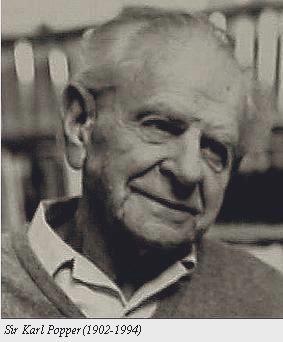
One of the most important thinkers of the 20th Century was the philosopher Karl Popper. Though he is most recognized as a philosopher of science, I believe his work on the defense of the Open Society will become more relevant in the immediate future.

Popper labeled himself a "critical-rationalist". My read on this term is that knowledge is the product of reason and sensory input and not merely sensory experience alone (thus the rationalist part of the term) and, that all our reasonings are theory-laden and prone to perspective laden bias (thus the critical portion of the label). Because Popper accepted that all knowledge is theory laden, he rejected the Newtonian idea of pure objective knowledge. From this premise, Popper narrowed the category of knowledge that is actually scientific to that which is falsifiable. Falsifiability becomes the test as to whether our knowledge can be asserted as scientific.

Critical-rationalism is inherently humble. If one understands that all his knowledge is theory laden, he will be inherently self-critical. This orientation toward one's own knowledge amounts to intellectual humility. One important ramification of Popper's critical understanding of knowledge is his attack on totalitarianism and Marxist historicism. As a result of this application of his theory of knowledge, Popper has a legacy of being a staunch defender of liberty.

Popper's Philosophical Defense of Liberty
Popper explained that a predictive system like Marxism (Marxism claims to predict history), if it is scientific, must be revised when its predictions do not come to pass. Moreover, for a theory to be scientific, it must be possible to construct a test in which if something other than the prediction occurs, the hypothesis is rejected. Marxism, as a system, refuses this type of critic and therefore is non-falsifiable. Popper, therefore, determined that Marxism is a dogma and is inherently non-scientific. This train of thought connects Popper's philosophy of science and his critique of Marxist historicism.

Marxism has the following components that tend toward totalitarianism. First, Marxist historical ideology states explicitly that history is taking a particular path. Marxism makes a prediction. Secondly, as a system of thought, Marxism proves itself to be non-falsifiable because Marxism has resilience against it's own predictive errors. In practice, if a Marxist makes a prediction and the prediction does not come to pass, the Marxist can explain its predictive failure using some caveat of Marxist theory. Thus, Marxism is not scientific because it is not falsifiable, Therefore, Marxism is a dogma.

Such a dogma would be harmless, except that Marxism takes this dogma into the actual realm of politics. Popper's point is that applying a non-falsifiable view of history as the ideological foundation of one's political agenda tends towards totalitarianism. The antidote to this poisonous concoction is liberal democracy. By liberal democracy is meant a democratic system founded on civil rights (e.g. the Bill of Rights).

The conclusion is that to support an open society we must support democratic ideals as opposed to our historicism. All of us bring predictive beliefs about economics and society into the realm of politics, but we must temper our dogma with a commitment to liberty and democracy. In the realm of politics, these commitments must be above all else. For the Christian, this requires a theology which understands the current limited means by which we are allowed to implement the kingdom of God.

Sunday, September 05, 2010

Mystery and Evidence - NYTimes

 I am doing a little series on how non-believers attempt to understand faith. In this article, Mystery and Evidence, Crane is making a few mistakes in his attempt to understand who he is criticizing (i.e. the believer). He seems to apply a criteria for understanding what is religious by a "majority rules" criteria of what defines authentic religious faith. Crane's method concludes that if most religious people experience religion as a way to inject meaning into things then this is what religion is about. But

Everybody Digs Bill Evans - Waltz For Debby

Saturday, September 04, 2010

Stephen Hawking's big bang gaps | Paul Davies

Stephen Hawking's big bang gaps
I think this idea of a God of the gaps is a straw man. 
(Update: God of the gaps is the idea that faith in God exists to fill in the gaps of our understanding of the universe. A trite view of a retreating God somehow intimidated by the progress of scientific knowledge).
No one who actually has faith has faith on the basis of a God of the gaps. People do not hold faith in order to answer a question of origins or to fill in some cosmological gap. People come to faith in response to a moral and spiritual sense of life. Others seek God to resolve a real life trial or to solve the problem of a character defect. People find resolution to a life problem and experience assistance from God. People who are arguing with this "God of the gaps faith" are arguing without any real living proponent of this position. This is a classic straw man.


Ben Bernanke's monetary policy - What's Next?

Next steps by Chris Payne guardian.co.uk
(This post has been slightly revised.)
This is a dire article. But the gist is as follows: Bernanke has very little policy left. The next actions are to prop up the bond prices up by buying moor securities. They then print money to pay for them. They also need to make a stronger statement that interest rates are going to stay real low for a real long time. This is really just a confidence builder. Really the last thing is to change the targets to desiring inflation. This means that their models change and they take more stimulative action.

Monday, August 30, 2010

Blessed are the Merciful and the Discipline of Mercy

The teachings of Jesus are immersed in a handful of foundational principles. One of these principles is that the follower of Jesus is to be an expert at showing mercy from the heart. The source of this mercy is our abiding awareness of God’s mercy toward us and our continual, frequent and recurrent need for mercy. 
Foundational Principles
Before, we jump into the discipline of mercy, let’s review Jesus’ way of discipleship. First, the first principle of all Christianity is that Jesus is the Christ. Jesus taught us that it is upon this rock, this first truth, that He will build His church. To believe that Jesus is the Christ is to have faith that the answer to the human predicament is solved by Jesus Christ. Jesus came to set the world right. Our faith is that by believing and following Jesus, we will experience a new quality of life. This quality of life is called the “Kingdom of Heaven” or the “Kingdom of God”. This kingdom is from the inside out. Jesus’ teachings center on heart management and life transformation. He teaches us to love our enemies from the heart. He teaches us to be humble and meek and merciful. By following Jesus, the King, we enter and experience His kingdom. This process of following Jesus and experiencing the kingdom is called discipleship. We experience the kingdom as we begin to pattern our lives through the teachings of Jesus. Therefore, we apply the teachings of Jesus in order to enter the quality of life called the kingdom. 

Tuesday, August 24, 2010

Jonathan Edwards on Law and Affection

The Jonathan Edwards makes this incredible point concerning why the law actually drives us to sin and the gospel to holiness. There are certainly people on this earth that are a gift from God and JE is one such gift...
The natural reason why it is as Romans 7:8 ff. [says], "But sin, taking occasion by the commandment, wrought in me all manner of concupiscence," etc. [The]9 reason why man

David Brooks, Dick Cavett and Mayor Bloomberg on the Manhattan Mosque

Numerous articles are being written in response to the Islamic Center in lower Manhattan and the on-going debate about the civil liberties of people of faith. It seems to me unreal that we are even having this discussion in America. Here are a few articles:
A Case of Mental Courage - NYTimes.com
Brooks' point is that, in America, we have lost a theological belief that the battle against sin requires strenuous mental work. This belief led to a strenuous intellectualism. But today our politics betrays an ignorance and a laziness with respect to understanding even the most basic issues like when to raise taxes and when to defend people's civil rights.

This is a must read. The behavior of people who claim the same Lord as I do are so blatantly refusing to follow Him. The racist and fear-based responses of some people of faith is sad indeed.

A highlight of course is Bloomberg's speech.
Hopefully, I will get time to write a more thorough treatment of this topic. I think it is important with respect to mission. People who are confident in the victory of the resurrection of Jesus do not resort to hate and fear as a means to accomplish our mission.

Review of Dave Matthews Band Live August 23, 2010 Hollywood Bowl 8/23/2010

When you wake up the next morning and all you can say to your wife is “WOW, that was pretty amazing”, then, ahhh, you probably saw Dave Matthews last night. Dave Matthews really is that good.
Highlights:
Jam Band Related

Tim Reynolds! It is hard to overshadow Carter Beauford but Tim Reynolds on electric guitar is the one that steals the show. Tim’s tone is perfect. His rig is usually either a strat or a Les Paul through a pair of Mesa Boogie rectifiers. It sounds to me like he is probably playing through the classic mode on the Mesas. The tone is just filled with the classic woody yet nasally midrange. Reynolds job is to make the main riffs that the songs are built around stand out and he does the job perfectly and never misses a beat.

Jeff Coffin from Bela Fleck and the Flecktones really does add a lot to the jam band side of things. It is just great to hear a band that gives a platform for good musicians to play improvisation. On #41, the opening song, Reynolds, Coffin and violin player, Boyd Tinsley, all took extended solos and set a great expectation for the night.

The return to real jam band numbers didn’t come until the end of the show but WOW the last 6 or so numbers at the end was just incredible.

Highlights

Monday, August 23, 2010

Ground Zero Mosque and American Values

This subject deserves a full essay but for now lets just state the themes. First, it is a threat to American values and our liberal democracy to deny freedom of religion to anyone. Christians should be standing up for Muslims to build a center or a Mosque anywhere they please. Secondly, as Christians, we will. It should be impossible for Christians to be baited into fear politics. We have nothing to fear from the world.

It is a sign of the weakness of our faith and the shallowness of our love that Christian leaders are not standing up for the freedom of other faiths. Now that would be a good witness.

peace,

Wednesday, August 18, 2010

Doing Mission Like Jesus - First Impressions


Our Universal Pre-existing Condition
The principles that guide our mission methods differ from the principles of discipleship. Mission is relating to people on the basis of our common humanity. All humanity is in a predicament. Some aspects of this predicament are beyond our control and some aspects of our predicament are self inflicted. Humans suffer from sickness and our natural inability which are thrust upon us by our common humanity. While at the same time, other aspects of our predicament are caused by our sinful and foolish lifestyle choices. In mission, we are not concerned with such matters. We do not question the causes of an individual’s tragic circumstance. Love covers a multitude of sins. We are all the same under the gospel. We are all victims of our own humanity, and we are all responsible to some remote degree for our suffering, but, in mission, we are not concerned with the causes of people’s predicaments. Jesus’ love to humanity is unconditional. The only question that Jesus asks during the mission process, the process of introducing Himself to human beings, is “where does it hurt?”. We all suffer from a pre-existing condition called humanity, and we all need the healer to come set us free. The gospel has no interest in condemning people because we are all already condemned and suffering from the fruit of the folly of our forefathers. Therefore, since we are all the same and there is no distinction, there is no use asking any questions to triage who is qualified for God’s love and mercy. Either we are all qualified for grace or we are all disqualified for grace. The cross of Jesus proclaims clearly, “we are all qualified for grace through the work of Jesus” to the glory of God.
In Mission We are Giving People a First Impression of God
All of us need to build our life with God on a foundation of His grace and love for us. Therefore, in mission we are giving people a first impression of God that is unconditionally loving and gracious. We do not ask the prodigal son or daughter how they got so stinky and dirty. We do not expose but, instead, we cover their shame. We do not interrogate the woman or man caught in the very act of adultery. We simply say “I do not condemn you”. We advocate for sinners and the weak. We bring healing. We are the spiritual Red Cross. The Red Cross brings nursing to both sides of a war. Injured Nazis get medical care from the Red Cross to the exact same level of care and urgency as the American liberator. This is an incredible metaphor for mission. When a dying soldier sees a Red Cross nurse or doctor, he is filled with a glimmer of hope in the midst of his suffering. This is the impression the church is to give to a dying world.

We have a lot of work to do.

Wednesday, August 11, 2010

Doing Mission Like Jesus

I am doing some study for a sermon. The sermon is going to be on doing mission like Jesus. My friend and pastor keith says, "Jesus got invited to all the good parties". This is a great probing phrase because it begs the question, "Do we get invited to all the good parties?" If not maybe we aren't doing mission like Jesus.

So here is a great blog post from Rob Wilkerson on the subject of "Doing Evangelism Like Jesus". Let the revolution begin.
peace,